
EMDR Therapy
EMDR (Eye Movement Desensitisation and Reprocessing) therapy offers a proven, evidence-based path to recovery that helps your brain process and move on from trauma and adversities.
When talking isn't enough
Sometimes, no matter how much insight we gain or how many times we talk something through, certain experiences just don't seem to shift. You might understand why something affects you, and yet you have physical responses to it and you find yourself reacting in ways you can't seem to control.
When we go through something overwhelming or distressing, our brain can struggle to process the experience properly. Instead of the memory being filed away like most others, it can feel stuck or frozen — stored with all the original emotions, physical sensations, and beliefs intact. So even years later a particular situation can make it feel as though the past is happening all over again.
This is where talking alone can have its limits. Conversation engages the thinking, reasoning part of our brain — which is incredibly useful, but it doesn't always reach the deeper place where these frozen memories are held.

Relational trauma
Trauma is not confined to single event experiences or those we typically think of when we hear the word trauma. Trauma can also be relational.
Relational trauma develops when our closest relationships — particularly in childhood, but sometimes in adult life too — become a source of fear, confusion, or pain rather than safety and comfort. Because human beings are fundamentally wired for connection, when the relationships we rely on feel unpredictable, threatening, or emotionally absent, the impact can be profound and far-reaching.
Relational trauma can develop through experiences like:
- Emotional, physical, or sexual abuse within a close relationship
- Growing up with a parent who was emotionally unavailable, depressed, or struggling with addiction
- Chronic criticism, humiliation, or feeling like you were never quite good enough
- Neglect — not necessarily physical, but emotional; simply not being seen or attuned to
- Walking on eggshells around an unpredictable or volatile caregiver
- Losing an important attachment figure through death, abandonment, or sudden separation
- Coercive control or abuse in an adult romantic relationship
- Being repeatedly let down by people you trusted
What makes relational trauma particularly complex is that it often happens within relationships where love was also present — which can make it harder to name, harder to make sense of, and harder to heal from.
How it can show up in adult life
Because relational trauma is rooted in our earliest experiences of connection, its effects can be far reaching. You might notice it in:
- Difficulty trusting others, or trusting your own instincts about people
- Relationships that feel intense, complicated, or that follow painful patterns
- A tendency to either cling to closeness or avoid it altogether
- Deep shame, or a persistent sense of being fundamentally flawed or unlovable
- Emotional responses that feel bigger than the situation seems to warrant
- Anxiety, hypervigilance, or always waiting for something to go wrong
- Difficulty knowing what you feel, what you need, or who you really are
- Physical symptoms — tension, fatigue, chronic pain — that don't have a clear medical cause
Any of these patterns, while painful, make complete sense when understood through the lens of attachment. They are adaptations — intelligent responses to what you once needed to survive emotionally. The difficulty is that they tend to create the very disconnection that causes you problems in your every day life.
Person centred and attachment informed EMDR goes deeper, identifying the roots of the patterns and providing opportunities to have important emotional experiences that support the nervous system to heal and rewire.
How does EMDR work?
EMDR therapy works by helping your brain's natural healing process reprocess traumatic memories, reducing their emotional impact and allowing you to move forward with greater peace and resilience.
 Watch Introduction to EMDR Therapy, from EMDR International Association, on YouTube
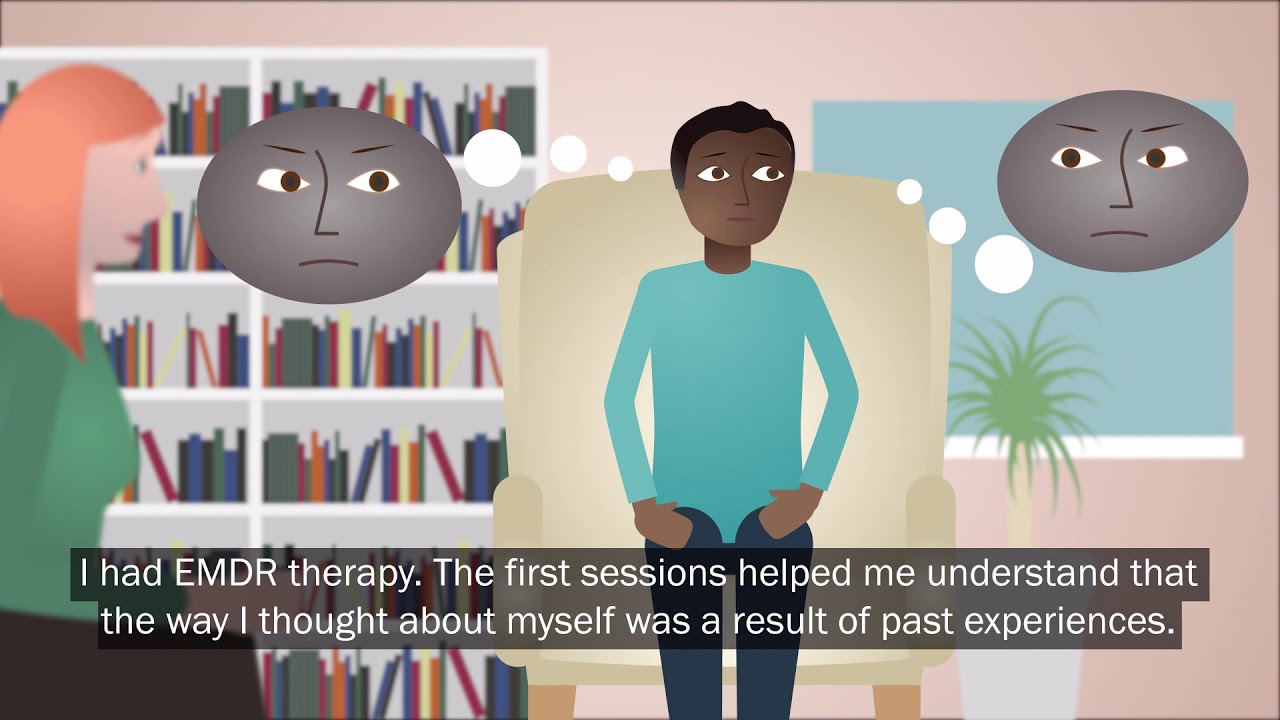 Watch Animation to explain EMDR Therapy and Trauma to Adults, from EMDR Association UK, on YouTube
Why choose EMDR treatment?
- NICE approved treatment for trauma and PTSD
- Effective for both recent and historical trauma and adverse events
- No need to re-live traumatic events in detail
- Combines seamlessly with person centred counselling approaches
You don't have to carry the weight of past experiences alone. EMDR therapy is tailored to what you need.
My approach
- Non judgemental
- Empathic
- Affirming
- Individual
Training
- EMDR Parts 1, 2 & 3
- Attachment informed EMDR training
What EMDR can help with
EMDR for anxiety
How EMDR targets the memories underneath anxiety rather than the symptoms, what sessions involve, and how it compares with medication and CBT.
EMDR for depression
When depression has roots in earlier experience, EMDR can target those memories. Who it suits, what the evidence shows, and how it sits with medication.
EMDR for OCD
Where OCD has a trauma component, EMDR may help. How it differs from exposure work, what the research supports so far, and who it tends to suit.
EMDR for phobias
Phobias often trace back to a specific memory. How EMDR works on that memory rather than through graded exposure, and what the research shows.
EMDR for ADHD
EMDR doesn't treat ADHD itself; it works on the trauma that often sits alongside it. How the two connect, with Liz Frings, BACP registered.
EMDR for autism
Sensory adaptations, pacing and communication differences that make EMDR workable for autistic adults, without treating autism as the thing to fix.
EMDR for eating disorders
The link between trauma and disordered eating, how EMDR is used alongside specialist eating disorder care, and what the evidence currently supports.
EMDR for narcissistic abuse
Why the trauma of gaslighting and coercive control outlasts the relationship, and how EMDR works on the beliefs about yourself it left behind.
EMDR for children
How EMDR is adapted for children and teenagers, the parent's role in sessions, and what to expect at different ages. Written for parents weighing it up.
Sessions and rates
The initial consultation is free — up to twenty minutes, with no obligation.
£65 for a 50-minute session, in person or online.
Longer 90-minute sessions are also available. Please get in touch to ask about these and about currently available slots.
Where we meet
I am available to have sessions online, and have limited sessions available at The Magnolia Centre, Mapperley Park, Nottingham. Please contact me for availability of in-person appointments.
Get in touch to discuss your needs for person centred therapy, or if you are interested in looking at how EMDR may help you within a person centred therapy approach.